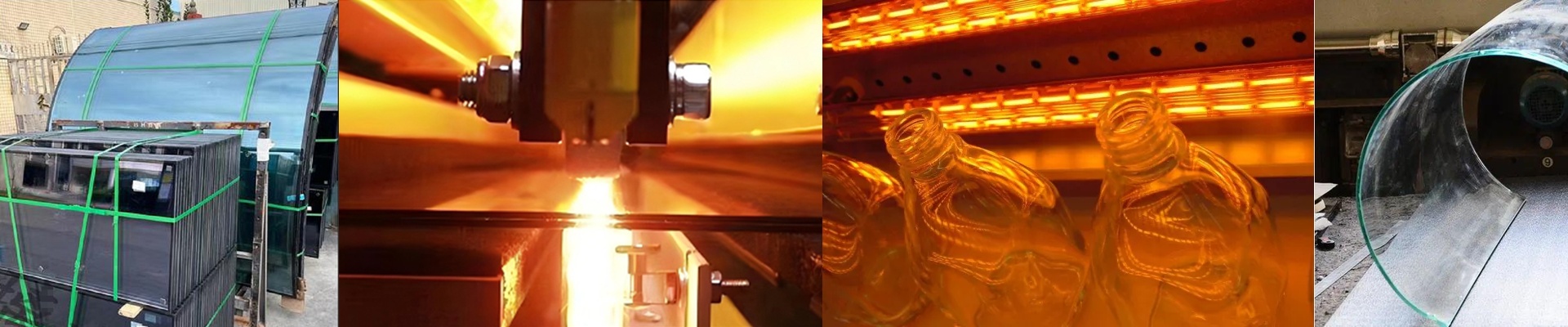
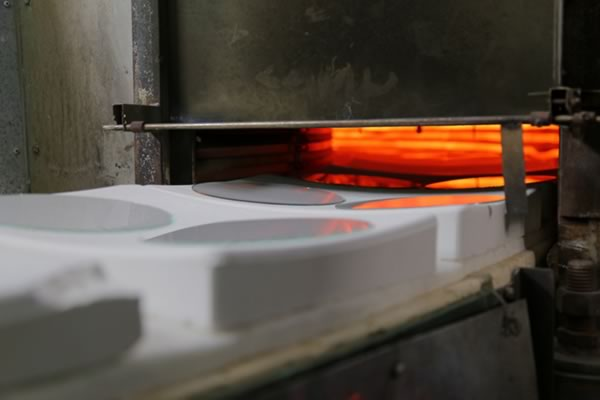
On the line, the scheduler is counting seconds, not minutes. As soon as a pane of mobile phone glass hits the curing station, the clock starts. If the lamp stutters, the whole cell drags. If the heat isn’t even, you stop seeing defects in ones and twos—you start seeing them by the tray. In glass processing, temperature isn’t a background setting. It’s the lever that controls yield, throughput, and cost per part. We built our mobile phone glass curing lamp for the reality of the floor: high-volume schedules, tight tolerances, and zero patience for thermal inconsistency. This isn’t a general-purpose heater. It’s a production tool shaped around the thermal behavior of cover glass, back glass, and thin glass laminates—where overshoot cracks edges, undershoot makes adhesion a gamble, and hot spots turn into optical distortion.
What matters, technically
The requirement is simple to say and tough to execute: deliver stable, repeatable heat to the glass surface and interface without adding thermal stress. We use short-wave infrared (SWIR) quartz emitters because they couple efficiently into glass and respond fast. The spectrum is tuned to match glass absorption, so the energy goes into the material instead of getting wasted heating air and fixtures. The response is quick enough to track line start/stop events without droop, and the control band stays narrow. The engineering choices translate straight into stable output:
- Fast thermal response: SWIR quartz emitters hit operating temperature quickly, so short dwell windows and rapid duty cycling are practical. When the line changes, the lamp tracks setpoint within seconds—so the first part isn’t an outlier.
- Uniform irradiance profile: Reflector geometry and lamp array spacing are set to create a uniform thermal field across the glass. Uniformity matters because curing is often edge-critical; a non-uniform profile shows up as inconsistent adhesion or warp.
- Closed-loop control: A calibrated sensor feeds a PID loop that keeps the process window tight. The payoff is repeatability shift to shift, lamp to lamp.
- Electrical fit for production: The module is available in standard industrial voltages, with robust terminations and shielded leads. It’s meant to drop into existing machine footprints, not force a station redesign. Numbers only matter when they show up on the quality chart. In production, this lamp runs with a tight temperature band, fast recovery after interruptions, and stable output over long duty cycles. That’s what keeps scrap out of the rework pile.
Why it works in this process
Mobile phone glass curing isn’t slow and gentle. It’s a high-cadence operation where every second of heat time is negotiated against takt time, and every extra degree is negotiated against breakage. The lamp earns its keep by clearing out the usual thermal bottlenecks:
- High-throughput cycles: Fast ramp and fast stabilization let the station keep pace with high-speed lines. You don’t have to stretch dwell time to guarantee curing—you hit the target inside the window you already have.
- Yield protection: Uneven heating creates thermal stress, and thermal stress leads to microcracks and edge failures. A uniform thermal field reduces that risk. The lamp also keeps hot spots from causing optical distortion in coated glass, so visual quality stays in spec.
- Energy discipline at scale: Industrial curing isn’t measured in single units—it’s measured in kilowatt-hours per thousand parts. Short-wave infrared energy is directed at the glass instead of dumping heat into the surrounding air, so the station uses less energy per cycle. Over three shifts, that shows up as a lower per-part cost.
- Drop-in replacement discipline: Many lines run proven equipment, and downtime is expensive. Our module is engineered as a direct replacement for common OEM heating sections, with compatible mounting and termination. You swap the lamp, not the station. On the floor, the wins are practical. Operators see fewer temperature excursions. Maintenance sees fewer alarms tied to heating instability. Quality sees tighter distributions on bond strength and warp, and fewer edge fractures that trace back to thermal shock.
What you need to know
A tool only works if it fits your reality—constraints included.
- Clearance and line of sight: Infrared curing performs best when the irradiance path is clear. Keep reflectors clean and maintain the proper standoff distance to the glass. If the path is blocked, you’ll get cold zones—and you’ll chase them by cranking power instead of fixing the geometry.
- Glass coatings and emissivity: Some coatings change surface emissivity, which changes how the glass absorbs energy. If you switch glass stacks—especially coated cover glass or laminated constructions—validate the thermal profile on the new material. The lamp is stable; the process window still needs verification.
- Electrical and thermal management: The module runs hot, and it has to be wired and cooled as specified. Use the rated connectors, keep cable runs within design limits, and make sure airflow or cooling paths are maintained. Pushing past those limits shortens emitter life and erodes control.
- Life and maintenance planning: Even with stable control, emitters have a finite life. Treat replacement intervals as preventive maintenance. Keep spares on hand, and make lamp replacement a scheduled, documented routine—like changing a cutting tool. We’re not selling heat. We’re selling predictable heat—repeatable, controllable, and matched to how glass behaves under thermal load. If your mobile phone glass line is tight and the curing station is the constraint, the fastest way to get more good parts is to make the lamp act like a production component, not just a heat source.