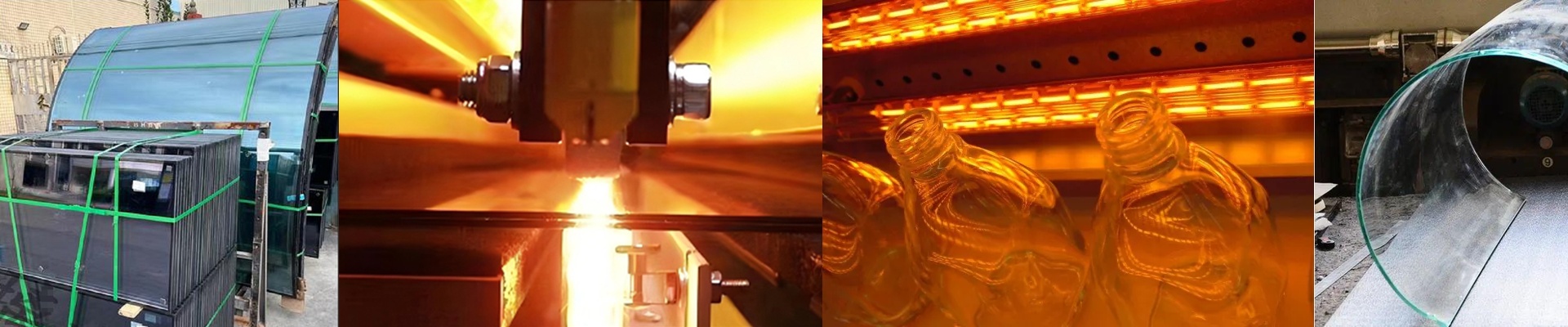

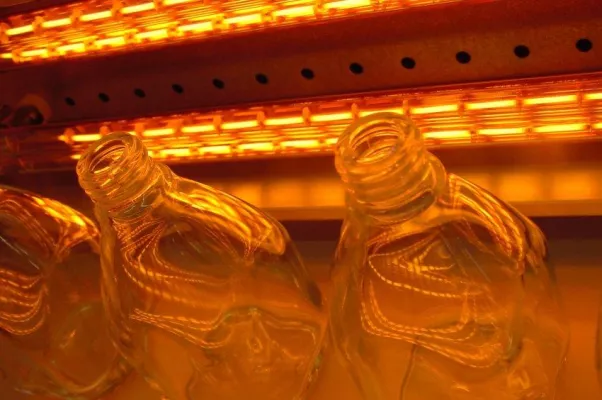
On the line, the glory hole heating element is where the schedule gets its teeth. When those quartz tubes fire, the glass has to hit setpoint fast, soak evenly, and move on—no thermal stress, no sag, no idle time. If the heat underperforms, you see it fast: off-temper, wave, and scrap. We built our glory hole elements to run the way a real glass plant runs, not the way a slide deck imagines it. What actually matters, technically We run short-wave quartz infrared emitters in a compact glory hole assembly because the response is immediate and the control is tight. High radiant density, low thermal mass—so the element comes up to temperature quickly and follows recipe changes without dragging. Power is matched to the furnace zone, with standard voltage options and terminations that drop into the existing busbars and connectors. The quartz envelope takes the thermal shock of repeated heat-up and cool-down cycles, and the geometry is set up to spread the radiant heat evenly across the glass width. Why it holds up in practice In tempering and bending, the glory hole owns the critical heating window right before quench or forming. Heat that arrives fast and even translates straight into higher throughput and fewer temperature-related defects. You get shorter heat-up times, more consistent surface temperature, and better optical quality across the sheet. Energy use drops because the element heats on demand and holds setpoint without overshoot. For lamination prep and coating drying, that same fast response cuts down on convection dependence and keeps the heat where it belongs—on the glass. The things you learn the hard way Installation is straightforward on standard glory hole fixtures, but clearance and alignment still matter. The quartz tube is tough, but it’s brittle—protect it from impact and from localized overheating. Match the element to the controller and to the glass emissivity; if those are out of sync, you’ll buy yourself uneven heating. And keep spares, plus a quick-swap procedure. When the line is down, every minute is measured in dollars.
라인에서 glory hole 가열 요소는 일정에 실질적인 영향을 미치는 부분이다. 쿼츠 튜브가 점화되면 유리는 빠르게 목표 온도에 도달해야 하며, 균일하게 유지하고 다음 공정으로 넘어가야 한다—열 스트레스나 처짐, 유휴 시간이 없어야 한다. 열 성능이 부족하면 즉시 문제가 드러난다: 온도 불균형, 웨이브 현상, 폐기 발생. 우리는 glory hole 요소를 슬라이드 자료가 상상하는 방식이 아닌, 실제 유리 공장이 운영하는 방식에 맞춰 설계했다.
기술적으로 실제 중요한 점
우리는 반응 속도가 즉각적이고 제어가 엄격한 단파장 쿼츠 적외선 방출기를 컴팩트한 glory hole 조립체에 사용한다. 방사 밀도는 높고 열 질량은 낮아 요소가 빠르게 온도에 도달하며 레시피 변경에도 지체 없이 따라간다. 전력은 용광로 구간에 맞춰 조정되며, 표준 전압 옵션과 기존 버스바 및 커넥터에 바로 연결 가능한 단자를 사용한다. 쿼츠 봉은 반복되는 가열 및 냉각 사이클의 열 충격을 견디며, 방사 열이 유리 폭 전체에 균일하게 퍼지도록 기하학적 설계가 이루어져 있다.
실제 작업에서 견디는 이유
템퍼링과 벤딩 공정에서 glory hole은 담금질이나 성형 직전의 중요한 가열 구간을 담당한다. 빠르고 균일하게 도달하는 열은 생산량 증가와 온도 관련 불량 감소로 직결된다. 가열 시간이 짧아지고, 표면 온도 일관성이 높아지며, 판 전체의 광학적 품질이 개선된다. 요소는 필요할 때만 가열하고 목표 온도를 초과하지 않고 유지하기 때문에 에너지 사용량이 줄어든다. 라미네이션 준비 및 코팅 건조 공정에서도 동일한 빠른 반응이 대류 의존도를 낮추고 열을 유리에 집중시킨다.
실제 경험을 통해 배우는 사항
표준 glory hole 장비에 설치하는 것은 비교적 간단하지만, 간격 확보와 정렬은 여전히 중요하다. 쿼츠 튜브는 강하지만 취성 재질이므로 충격과 국부 과열로부터 보호해야 한다. 요소를 컨트롤러 및 유리의 방사율에 맞춰 조정하지 않으면 가열 불균일이 발생한다. 예비 부품을 확보하고, 신속 교체 절차를 마련해야 한다. 라인이 멈추면 매 분이 비용으로 직결된다.