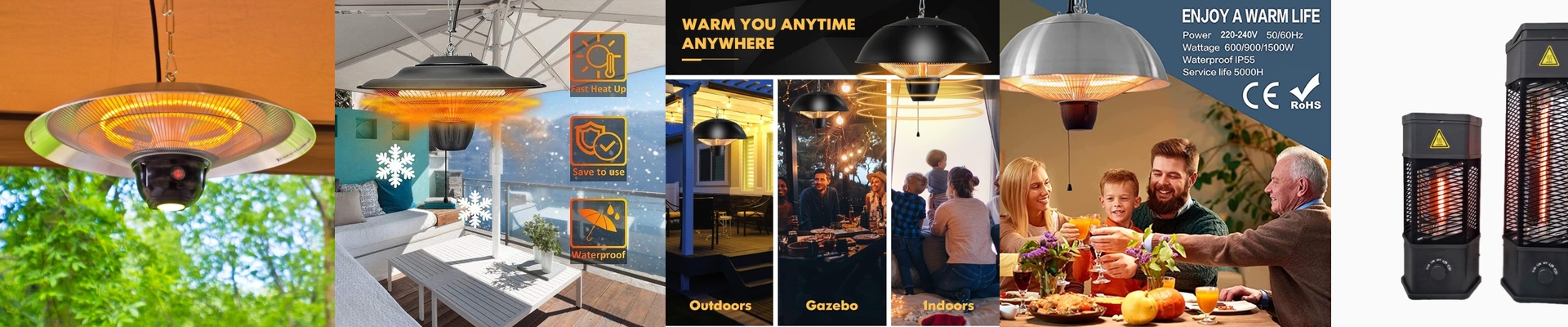

Instant Heat, No Wait: The Secret Behind Our High-Response Halogen Infrared Heaters
Ever had a cold snap hit right when you needed things to move? That awful waiting game for a heater to warm up isn’t just a minor inconvenience. It’s a production killer. So we built something to fix that. Our Eco Mode infrared heater cuts the wait to zero. The secret? A halogen element designed to get hot—like, instantly hot.
The Magic Behind the Speed
Here’s the thing about our system: it uses a high-output halogen lamp that hits its full operating temperature in seconds. No heavy, sluggish thermal mass. No slow soak-up of energy. It’s direct-radiant, meaning it turns electricity into infrared heat the moment you flip the switch. The result? You get heat where you need it, right away. No lag. None of that frustrating wait you get with convection heaters. And the Eco Mode logic is refreshingly simple. It keeps the temperature steady by adjusting the output, so you don’t get that on/off cycling that wastes energy and causes temperature swings. It keeps your process stable while keeping the power draw in check.
What It’s Made Of
The lamp itself is a halogen-filled quartz tube. The halogen gas lets the filament run hotter without burning out quickly, which gives you that high-intensity infrared output. Quartz, on the other hand, handles the shock of rapid startup and stays solid through repeated on/off cycles. We also made sure the installation is a breeze. It uses a standard R7s connector, so it’s a quick, secure, drop-in replacement for existing fixtures. And because it’s compact, it fits into tight spots where other heaters just can’t go.
What This Means for You
In a fast-moving environment, that first minute is everything. With our heater, there’s no preheat. You turn it on, and the heat hits the target immediately. That kind of speed is perfect for spot heating, process warming, and freeze protection—anywhere you need consistent conditions, fast. But, and this is important, that high heat density means you need to manage the heat properly. The fixture runs hot, so you need to give it enough clearance and ventilation. Think of the heat path like part of the machine itself—plan for airflow, or the components around it will suffer. We built this for engineers who just want predictable heat, fast, without a complicated installation getting in the way.