

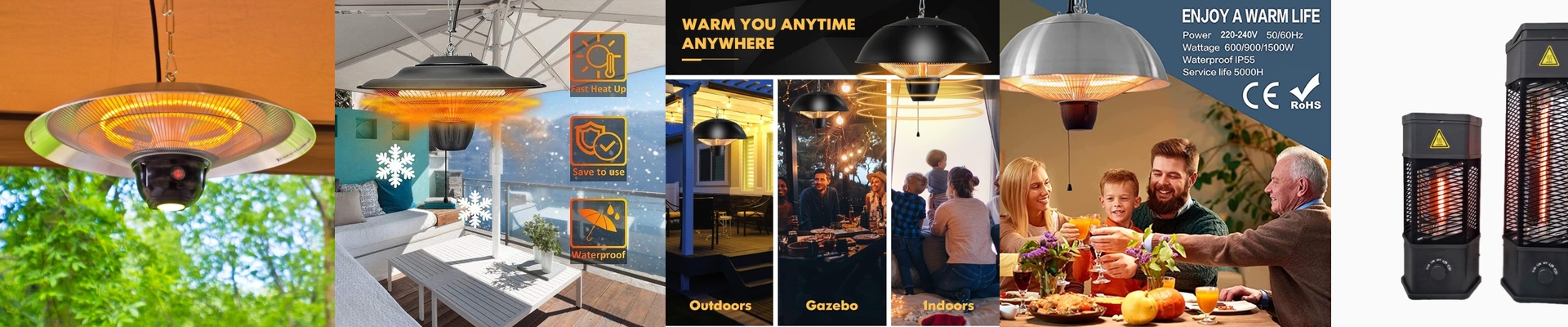


Stepping into your garage on a winter morning hits you right in the face. The air bites, your fingers stiffen, and even swapping into work boots feels like a chore. An infrared garage heater flips that script—quick. In seconds, the cold backs off, and you get a deep, even warmth that turns the space from drafty workshop into a place you actually want to be.
What matters, technically
Infrared garage heaters work the way the sun does—radiating heat directly to people and objects, not the air. Inside, a carbon fiber or quartz element heats almost instantly, sending long-wave infrared warmth across the room. Many models run off standard 120V or 240V outlets, pulling anywhere from 1500W to 5000W depending on the area you need to cover. If you want steady comfort, pick a unit with a built-in thermostat. And look for a solid housing with an IP rating that can handle dust and damp—garages aren’t exactly clean and dry. For peace of mind, the basics should be there: tip-over protection and an overheat cutoff.
Why this works in a garage
A garage is more than a place to park the car. It’s your workshop, your staging area, your weekend headquarters. Traditional forced-air heaters take a while to warm the air, and the heat climbs to the ceiling and disappears the moment the door opens. Infrared warmth lands where you need it—on your body, your tools, the workbench. The payoff is immediate comfort, fewer distractions, and a space that feels usable. You get faster warm-up, more consistent temperatures, and lower running costs because you’re heating what matters, not the empty air.
The practical details
Infrared garage heaters are straightforward to install, but placement makes all the difference. Mount the unit at head height or a bit above, angled toward the spots where you stand and move, and keep clearances clear of stored materials. For spaces bigger than 400 square feet, a 240V heater—or a second unit—often makes sense to avoid cold spots. Plan your outlet and cord length ahead of time; if it’s a permanent setup, hardwiring is usually the cleanest route.