
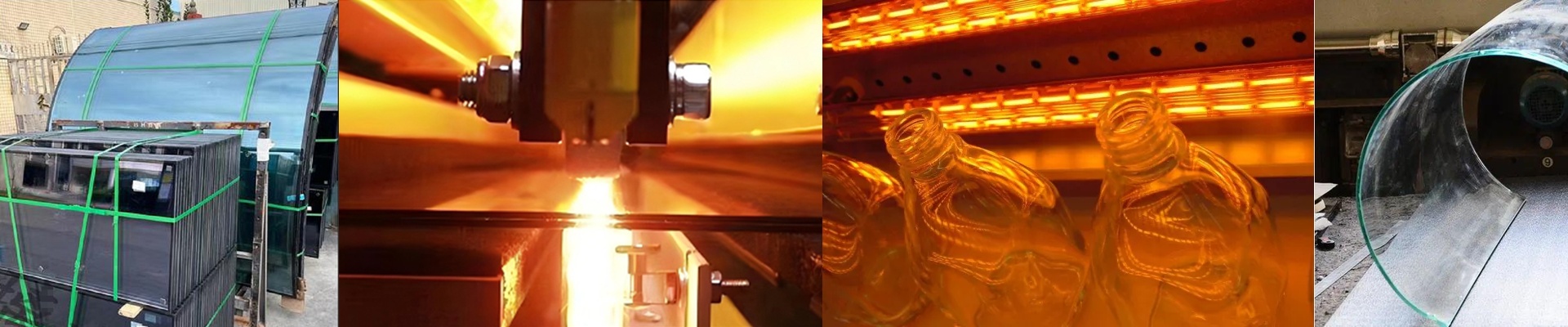

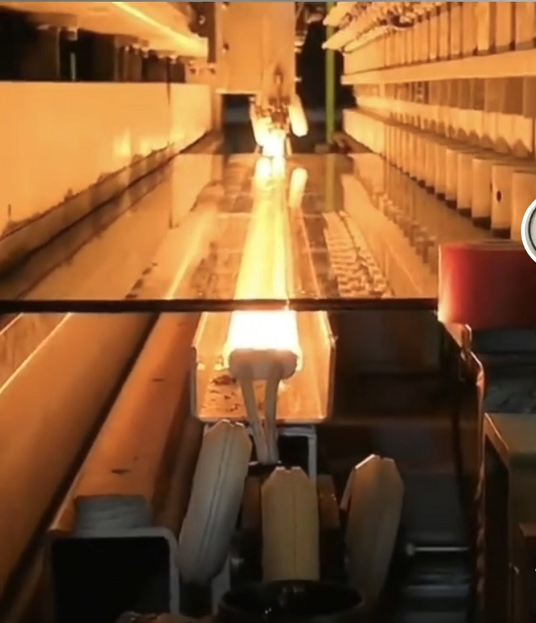
Out on the line, a decal has to stick clean—no bubbles, no haze, and no thermal stress that shows up later as spontaneous fracture. If the heater can’t hold its temperature, you’re staring at rework, scrap, and a line that stops cold while it waits for stability. We built this glass decal firing heater to sit right where the process needs repeatable heat, fast recovery, and tight control. What actually matters under the hood The unit is built around short-wave NIR quartz emitters, because they respond fast and pack high power density into a small footprint. Target output is 3–12 kW, and it can be configured for 240 V or 480 V service, so it drops into what your supply and control panels already expect. The emitters run hot, so we use shielded housing and a grounded chassis—operators stay safe, even around moving glass and the conveyor access points. Temperature control is closed-loop, with the sensor placed near the decal zone, not on the housing skin. That gives you a stable thermal field across the glass, not just a heater that gets hot. Why it holds up in real glass work Decal firing is strictly time-and-temperature. Glass comes in, the decal cures, and the glass leaves—without overheating the substrate. With rapid ramp-up, it can keep pace with high-throughput tempering and bending lines where seconds per part are the difference between hitting the schedule and chasing scrap. Uniform heat distribution cuts edge-to-center variation, which means fewer rejects from differential expansion. Energy use stays sane because NIR heats the decal layer directly, so you’re not wasting convection heat on the air in the plant. The same module can be integrated as a drop-in section for lamination prep and coating drying, which shortens changeover. Here are the practical details you’ll live with NIR is fast, but it needs clear line-of-sight and proper shielding. Keep reflectors clean, align emitters to the glass width, and make sure your conveyor material can take the radiant load. You can mount the heater in a new line or retrofit it, but verify wiring and control compatibility against your PLC and safety interlocks. Plan for thermal expansion and service access—even a tough quartz element needs inspection on a predictable cadence.