
Why Workshops Are Making the Switch to High-Waterproof Infrared Heaters
Here’s the thing—if you’ve been using those old lamp-style heaters, you know the headache. They just can’t handle the real-world conditions of a modern workshop. We’re seeing a clear shift toward high-waterproof infrared heaters, and it’s not just about making things warmer. It’s about finally getting a heater that can actually keep up in a tough, humid environment that gets washed down constantly. The old lamps? They struggle with sealing issues, thermal shock, and condensation sneaking in. These new infrared units are built from the ground up to take that abuse without dying on you. No more premature burnouts. Just reliable heat, day after day.
Power, Voltage, and Planning—Keeping It Simple
These aren’t your average home heaters. They’re built for the heavy lifting of industrial work. You’ll typically see them running on 220–240V or 380–400V, with wattages ranging from 1500W to 2500W. That kind of power lets you cover a huge area from one ceiling mount. Going with higher voltage means you can run longer cables without worrying about voltage drop. It just makes the whole setup more efficient. And the physics is pretty straightforward: the hotter the surface, the farther the heat throws. So when you’re planning the layout, you focus on the beam spread and making sure the heat hits the work surface—not just warming up the air.
The Inside Story: Quartz, Halogen, and Smart Connectors
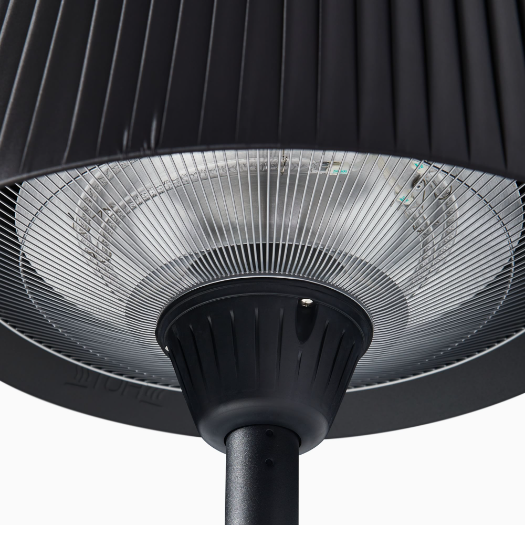
The heart of these heaters is the quartz tube. It’s chosen because it can handle sudden temperature changes and stay stable at high heat. Inside, a halogen fill helps extend the life of the element by slowing down filament evaporation. Smart. Then there’s the reflector, which directs the energy straight down where you need it. You get more radiant heat on the floor, and less wasted going up to the ceiling. And the connectors—R7s or SK15—are practical choices. They lock down tight, even when things vibrate, make replacement a breeze, and can handle the high temps without getting soft. For many setups, it’s as easy as swapping out the old fixture.
Real-World Performance and What It Feels Like
In a workshop or any high-humidity space, these heaters shine. They deliver direct, line-of-sight warmth that doesn’t get lost heating the air. With an IP54 rating or higher, you know moisture isn’t getting inside. No shorts. No corrosion. Just peace of mind. Installation? Pretty straightforward. Hard-wire the fixture, line up the reflector, set the thermostat. Done. Just keep in mind—because the heat is so concentrated, you’ll want to match it with proper cooling or ventilation so you don’t overheat sensitive gear.
The Waterproof Edge—Why It’s a No-Brainer for Upgrades
The waterproof build is really the reason these have become the new standard. Old lamp heaters just don’t seal up right. Water and dust get in, and it’s all over for the terminals. These infrared units seal the junction, protect the lamp ends, and keep the electronics bone-dry. So when you’re doing a retrofit, you’re getting a solution that meets the specs, performs predictably, and cuts down on maintenance calls. It’s the kind of upgrade that makes you wonder how you ever put up with the old way.