
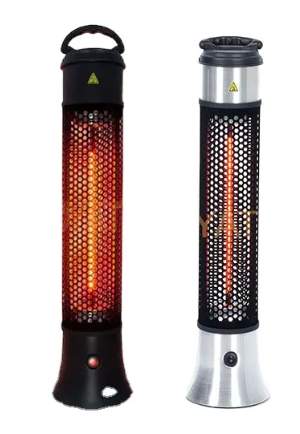
Keeping Your Bathroom Infrared Heater from Becoming a Hazard
Putting infrared lamps in a bathroom is a bit of a gamble. You’ve got constant steam, random splashes, and electricity all hanging out in the same small space. If you want that IPX5 rating, you can’t just throw a plastic shell around the heater and call it a day. You have to actually separate the electrical guts from the moisture.
Where the leaks actually happen
Most of these units fail at the termination points. It’s almost always the spot where the lamp meets the power lead. That’s the weak link. To stop water from sneaking in, we use sealed gaskets and moisture-resistant potting compounds right at the terminals. It basically plugs the holes. The quartz tube itself can handle the heat, but the leads? Not so much. That’s why we stick with high-temperature silicone cabling and reinforced sleeves. It keeps the current where it belongs, even when the whole thing is dripping with condensation.
The battle against heat and humidity
Water and high-wattage lamps are a nasty mix. Imagine a cold drop of water hitting a scorching hot quartz tube. Crack. Thermal shock is real, and it’s messy. We handle this by using specific glass blends or adding protective guards. The goal is to deflect the splashes without blocking the heat from reaching you. Then there’s the humidity. Damp air makes electricity “crawl” across surfaces—what we call tracking. To stop that, we use materials with high dielectric strength. It’s basically an invisible wall that tells the electricity, “Stay put.”
The trade-off you need to know about
Here’s the catch. When you seal everything up tight for an IPX5 rating, you kill the airflow. Because the air can’t move as freely, the inside of the fixture gets way hotter than it would in an industrial setting. If you use cheap wiring, the insulation will just bake and crack over time. The fix is simple: use components rated for high heat. If you don’t, you’re just waiting for the thing to burn out early. Stick to the heavy-duty stuff and it’ll actually last.